The Rules of Manipulation: Attract Any Man with Confidence

Unlock the art of genuine attraction with self-assuredness, emotional intelligence, and subtle influence. Discover the power of confidence and connection.
Uncover the secrets of your mind: Learn how psychology can help you understand yourself, make better choices, and unlock your full potential.
Unlock the art of genuine attraction with self-assuredness, emotional intelligence, and subtle influence. Discover the power of confidence and connection.
Explore the hidden meanings behind common dreams like falling, being chased, or teeth falling out, unraveling the mysteries of the subconscious mind.

Discover the hidden strengths of being an introvert with Susan Cain’s “Quiet.” Dive into the science behind introversion and unlock 15 amazing superpowers.
Explore the intricate dance between our instinctual System 1 and analytical System 2 in decision-making. Discover how these two systems shape our choices.

Ever catch yourself mirroring a friend’s slang or changing your opinion after a heated group debate? We’ve all experienced those moments where we wonder, “Why did I do that?” Turns out, there’s a whole field of psychology dedicated to unraveling the intricate ways we’re influenced by those around us. Elliot Aronson’s “The Social Animal” takes … Read more

Imagine a scenario where your relationship, which once thrived on trust and companionship, now seems draped in the shadows of doubt and secrecy. It’s a common storyline in films and literature, but when it unfolds in real life, the emotional stakes are profoundly real. Infidelity, a delicate subject that strikes a chord in the heart … Read more
To achieve success, navigating early conversations in dating requires finesse—finding the sweet spot between showing genuine interest and retaining an intriguing allure. The right phrases do more than just catch his attention; they invite him into a deeper exploration of your thoughts, dreams, and experiences, nurturing a meaningful connection. Here’s how to weave words into … Read more

These Positive Traits Are Unique to Pessimists Often relegated to the shadows of negativity, pessimism is seldom recognized for the nuanced and layered perspective it contributes to the human experience. Misconceptions abound, painting pessimists as perpetual rain clouds in a world that prizes sunshine. Yet, this simplistic view fails to acknowledge the intricate interplay of … Read more

Understanding the Nuances of Affection and Independence Picture this: a mega-rich celebrity, bored and out of touch, parades around with a real human being dressed as a pampered lapdog. The miniature person performs tricks for treats, completely at their owner’s beck and call. Is it funny? Disturbing? Or does it make you wonder where we … Read more
Do you know that the colors can say a lot about your personality and character? As per specialists, our favorite colors can reveal a lot about us. It’s called color psychology. What is your preferred color from the color wheel in which you feel well and accompanies you throughout your life? Whether red, green, blue, … Read more

15 Good Reasons to Turn That Frown Upside Down We’ve all heard the adage “a smile is the prettiest thing you can wear.” But is there more to this simple act than meets the eye? As it turns out, science, psychology, and even anecdotal evidence suggest that a genuine smile can have a profound impact … Read more

Stress is an inescapable part of modern life. It can manifest as a knot in your stomach, a racing mind, or a short fuse. While some stress can be a catalyst for action, the chronic, relentless kind takes a grave toll on our physical and mental health. To combat it effectively, we must first understand … Read more

Words that Attract, Inspire, and Create Positive Change We all want to make a positive impression – to be heard, understood, and build connections. But have you ever considered the power of your word choice in achieving this? Certain words carry an almost magical ability to draw people in, fostering feelings of warmth, trust, and engagement. Let’s explore why these words resonate so deeply and how to weave them more intentionally into your conversations. The Power of Positivity It’s no secret that positive language is magnetic. Words like “wonderful,” “excited,” and “opportunity” evoke a sense of optimism. Research in positive psychology shows that our brains are wired to attune to the positive – it feels good, offering a reprieve from the barrage of negativity we often encounter. Sensory Language: Ignite the Imagination Vivid, descriptive language appeals to our senses, making your communication more engaging and memorable. Rather than “The meal was good,” try “The aroma

A Woman’s Insider Guide to Understanding the Male Psyche Cracking the Code of Male Communication Let’s be real, ladies: trying to decipher the male mind can feel like learning a foreign language. They offer cryptic half-answers, deflect with humor, or clam up entirely, leaving us feeling frustrated and unsure. But what if I told you there are ways to crack their code? Picture this: you’re on a date with a new guy. He seems great on paper (or at least his dating profile) – handsome, successful, funny. His words paint a picture of an open, emotionally available man, but there’s a nagging disconnect. Something in his mannerisms, the subtle shifts in his voice… it just doesn’t fully align with the image he’s trying to project. Wouldn’t it be fascinating if you could tap into what’s going on beneath the surface? Well, years of helping people unravel their inner selves have taught me a thing or

Have you ever felt like a fraud, secretly fearing that one day everyone will discover you’re not as talented, competent, or intelligent as they think? You’re not alone. This pervasive feeling, known as Impostor Syndrome, haunts many of us, from the student in the classroom to the CEO in the boardroom. It’s a psychological pattern where individuals doubt their accomplishments, fearing that they’ll be exposed as a “fraud,” despite evident success. We will venture into the depths of Impostor Syndrome, shedding light on its intricacies, impacts, and strategies to overcome it, guiding readers of all ages on a path to self-acceptance and genuine confidence. The Many Faces of Impostor Syndrome A Universal Struggle Impostor Syndrome does not discriminate. It affects people of all ages, genders, and professions, often hitting the most accomplished and outwardly confident individuals. It’s characterized by a chronic sense of self-doubt and a profound belief that one’s success is undeserved, attributing achievements

Imagine stumbling upon a peculiar word, perhaps something as obscure as “crepuscular” – relating to twilight. You find its meaning fascinating and move on with your day. Then, almost as if the universe conspired, you see the word again, in a book, overhear it in a conversation, and it even pops up in the movie you watch that evening. Suddenly, this once obscure term is everywhere you look. This eerie sequence of events is not the cosmos sending you signals but rather a psychological phenomenon known as the Baader-Meinhof Phenomenon, or the Frequency Illusion. This article delves deep into the crevices of this captivating phenomenon, exploring its psychological underpinnings, societal implications, and the intricate dance between perception and reality. As we unravel the threads of the Baader-Meinhof Phenomenon, we invite you to a journey of self-awareness, where you’ll learn not just about how your brain tricks you into seeing the world but also how this

In the heart of ancient Greek mythology lies a tale that mirrors one of the most fascinating psychological phenomena observed in human behavior—the Pygmalion effect. The story goes that Pygmalion, a sculptor disenchanted by the flaws of mortal women, crafted a statue so perfect and beautiful that he fell in love with his own creation. Through his desire and belief in the statue’s life-like qualities, it was brought to life by the goddess Aphrodite. This ancient myth serves as an allegory to a modern psychological reality: the power of expectations to shape human performance. The Pygmalion effect, named after this myth, explores the dynamics between expectancies and human potential. It reveals a compelling argument: the expectations we hold about the abilities of others can significantly alter their performance, often leading to an increase in their capability to achieve. This phenomenon stretches across classrooms, boardrooms, and even extends to personal relationships, illustrating the profound impact of

The Boomerang Effect emerges as a fascinating, often paradoxical, phenomenon. It underscores a simple yet profound truth: attempts to change minds or behaviors can sometimes lead to the very opposite of the intended outcome. This effect, reflective of the complex nature of persuasion and human psychology, provides a compelling narrative on the unintended consequences of influence attempts. In exploring this curious effect, we embark on a journey through the realms of psychology, sociology, and beyond, shedding light on why and how our best-intentioned efforts can sometimes backfire spectacularly. Understanding the Boomerang Effect At its core, the Boomerang Effect refers to the unintended consequence of reinforcing the original behavior or belief instead of changing it, as a result of efforts to alter that behavior or belief. This phenomenon is not merely a curiosity of human psychology; it is a mirror reflecting the intricate ways in which people resist, reinterpret, or outright reject attempts to influence their

Picture this: You’re engrossed in a gripping mystery novel, only to be forced to put it down just as the plot reaches a fever pitch. Or, maybe you’re in the middle of a complex work project when an unexpected meeting pulls you away. Those unresolved plot twists and lingering to-dos have an uncanny way of sticking in your mind, nagging you far more insistently than tasks you’ve successfully finished. This mental quirk is known as the Zeigarnik Effect. Named after Bluma Zeigarnik, a trailblazing Soviet-Lithuanian psychologist, this phenomenon describes our peculiar tendency to remember unfinished or interrupted tasks better than those we’ve completed. It’s as if our brains simply cannot tolerate loose ends and unresolved storylines. The Science Behind the Mental Itch The Zeigarnik Effect has fascinated psychologists for nearly a century. So, why do interruptions stick with us so powerfully? Here’s how it works: Motivational Tension: When you embark on a task, your brain

Imagine browsing your social media feeds. A new restaurant seems to have taken over, with friends and influencers alike raving about the food and ambiance. A wave of hunger washes over you, though it’s not necessarily the menu descriptions that are tempting. Rather, it’s the sheer popularity, the feeling that if you don’t try it soon, you’ll be out of the loop. This is the Bandwagon Effect in action. The Bandwagon Effect is a potent social force that describes our tendency to adopt beliefs, styles, or behaviors simply because they have achieved widespread popularity. It’s like being swept up in a tide of conformity, often drawn less by rational judgment and more by the momentum of the crowd. The Psychology of the Trend Why do we fall prey to the Bandwagon Effect? There are a few psychological mechanisms at play: Social Proof and the Desire to Belong: As social creatures, we crave connection and acceptance.

The best of intentions can sometimes yield the very worst outcomes. We’ve all fallen prey to quick fixes that seemed foolproof at first glance, only to worsen the problems we were trying to solve. There’s even a term for this phenomenon: the Cobra Effect. The Cobra Effect occurs when a well-intentioned solution to a problem creates unforeseen consequences, ultimately making the situation worse. This counterintuitive outcome offers a stark reminder of the interconnectedness of systems and the complexities inherent in addressing issues in the real world. The Origin: Snakes on a Train (or Colony) The term “Cobra Effect” finds its origin in a peculiar historical anecdote from colonial India. The British government, struggling with a venomous cobra infestation in Delhi, devised a seemingly simple solution: offer a bounty for every dead cobra turned in. The strategy, they reasoned, would incentivize the population to control the snake problem. Initially, the plan appeared to work brilliantly. Large

A long time ago, yet in a world increasingly driven by consumerism, an 18th-century French philosopher’s observations resonate more profoundly than ever. Denis Diderot, in his essay “Regrets on Parting with My Old Dressing Gown,” unwittingly laid the foundation for what we now call the Diderot Effect. This psychological phenomenon describes how the acquisition of a new possession often leads to a spiral of consumption, compelling us to buy more new things to complement or match the initial purchase. As we delve into the intricacies of the Diderot Effect, we explore not just its implications on personal spending and identity, but also its broader impact on societal consumerism and environmental sustainability. Through a blend of narrative, expository, and persuasive styles, this article illuminates the paths of desire woven into the very fabric of our lives, urging a reevaluation of our consumption patterns. The Genesis of Desire: Diderot’s Dressing Gown Denis Diderot’s reflective essay from the

The Subtle Power of First Impressions Imagine walking into a room and, within moments, forming an opinion about every person you see. This instant judgment, influenced heavily by our first impressions, can significantly shape our interactions and decisions. This phenomenon, known as the Halo Effect, represents the cognitive biases that color our perceptions of others, often without our conscious awareness. As we delve into the essence of the Halo Effect, we explore how this psychological bias impacts various aspects of our lives, from the workplace dynamics to social interactions and marketing strategies. By understanding the Halo Effect, we invite readers on a journey to uncover the subtle yet profound influence of first impressions in shaping our world. The Origins of the Halo Effect: A Deep Dive Edward Thorndike’s early 20th-century research illuminated the Halo Effect, revealing how positive perceptions in one area could influence positive perceptions in unrelated areas. For instance, consider a scenario where
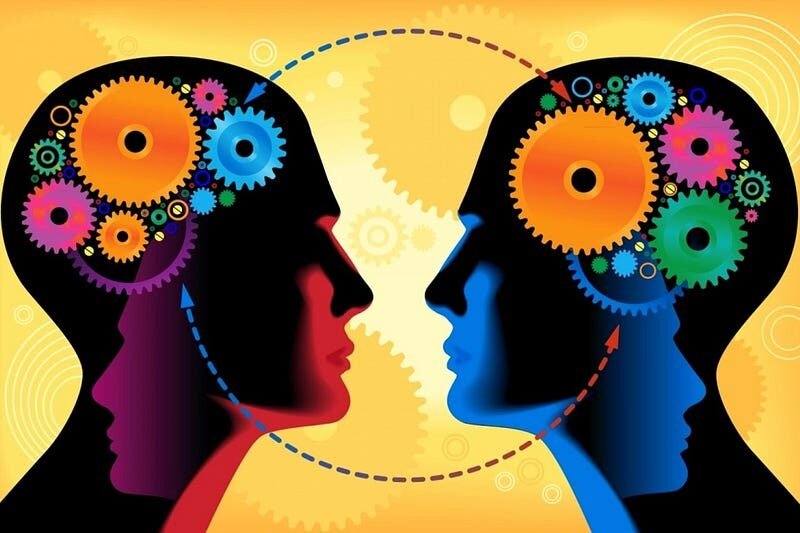
Is it a disadvantage to be introverted? In an era where the buzz and hum of extroversion are often mistaken for the sweet sounds of success, a profound shift is underway, challenging the status quo. This shift, led by some of the most forward-thinking psychologists and cultural observers, heralds a new appreciation for the introverted soul—those individuals who navigate the world with a reflective and introspective compass, preferring the rich depths of solitude and thought over the broad highways of social engagement. The Extrovert Ideal: A Cultural Bias Society, with its kaleidoscope of social media platforms and a relentless calendar of events, seems to be on a constant quest for noise, visibility, and connection. Extroversion, characterized by a thirst for social interaction and a preference for the outer world of people and activities, has long been venerated. Success and personal fulfillment are often measured by the length and breadth of one’s social networks—both online and

What are all things that always attract us to the other sex? Undoubtedly, in Great Britain, there a significant number of researchers on human beauty. It is enough to mention the Laboratory of Perception, the most important centre for studies on aesthetics and beauty globally. This laboratory recently completed research that examined almost 10,000 people from 30 different cultures around the world, in which it was tried to find out what is most pleasant to us in the opposite sex. Let’s look at the results. Historically, it has always been said that women favour choosing their partners based on financial means and prefer to leave physical attractiveness in the background to provide themselves with economic resources. At the same time, men tend to exchange this economic capital for physical beauty. The concern of women for socioeconomic status and the accent of men for physical and visual attractiveness was taken for granted. But times have changed, and women’s economic

Follow these tips if you feel an obsession with someone and want to overcome this feeling faster. Obsessing over a person is a situation that can happen to anyone at some moment. To overcome a problem of this type, it is essential to know why this fact occurs to combat and overcome it. The Obsessed Mind: An Emotional Hijacking First of all, it is crucial to know how the mind works when you are obsessed with another person. Whoever experiences this sensation feels that his mind is prey to a kind of emotional kidnapping; it cannot control its thoughts or understand them because it loses the notion of what is real, good and bad for itself. Thus, distorted thoughts follow each other, which end up dominating the head of the person who is suffering from this obsession. It feels unable to discern between what is real and what is not, coming to create many ideas that have little

Navigating the Unseen Forces That Shape Our Decisions In the theater of human interactions, manipulation stands as an art veiled in shadows, orchestrating the dynamics of decision-making with the subtlety of a seasoned puppeteer. It’s the whisper in the crowd that directs attention, the invisible hand that guides actions. This article delves into the clandestine rules governing manipulation, revealing how unseen forces mold our perceptions, decisions, and, ultimately, our lives. I. The Law of Reciprocity: The Invisible Ledger The first unwritten law, the Law of Reciprocity, thrives on the principle of give-and-take, an invisible ledger of social exchanges. In the intricate dance of human relationships, gestures of goodwill are not merely acts of kindness but investments expecting returns. Manipulators leverage this law, offering favors, gifts, or concessions to invoke an internal pressure of indebtedness, subtly coercing individuals into reciprocating with disproportionate generosity or compliance. This exploitation of our innate desire to maintain social fairness and