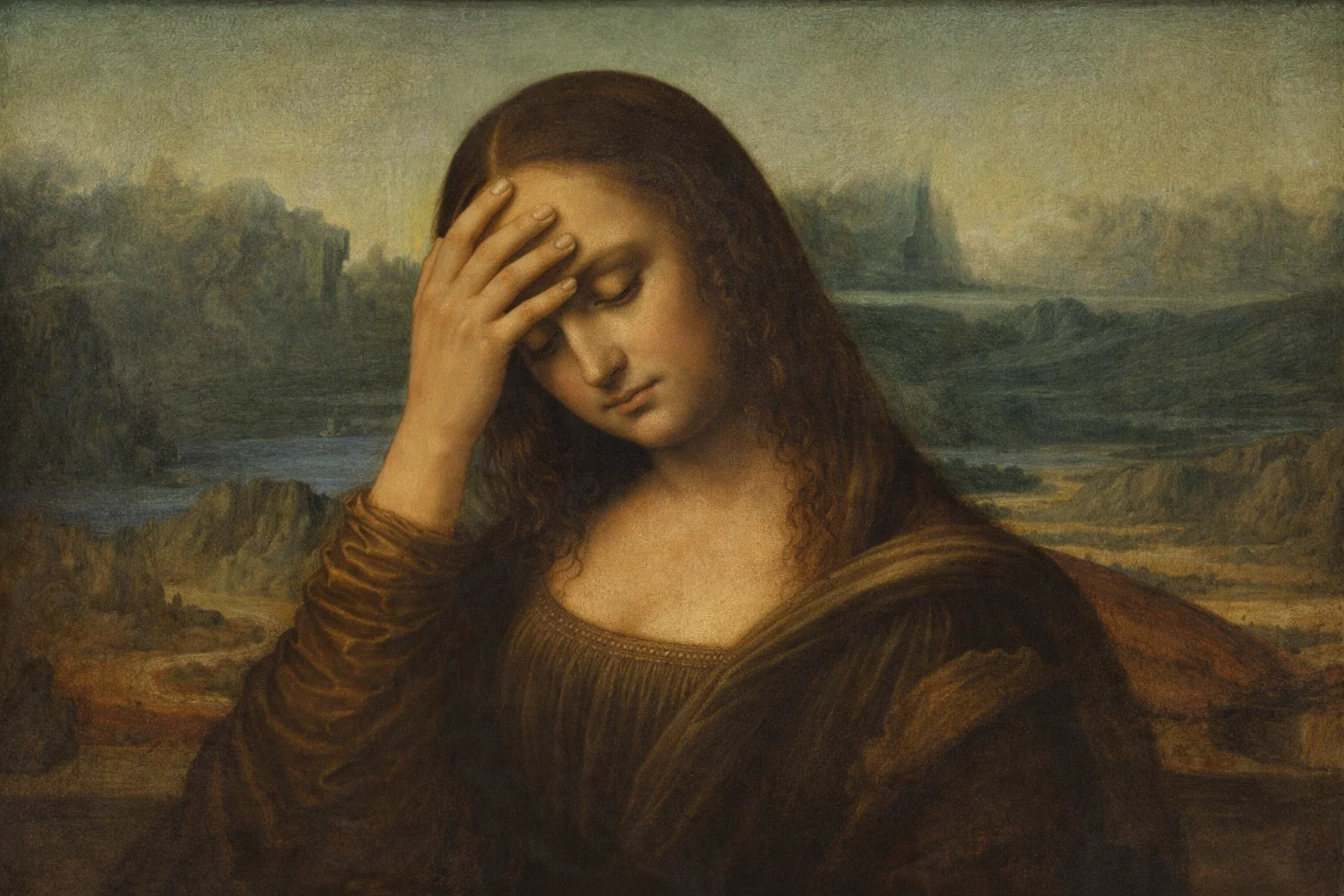
There is a peculiar discomfort in standing before a work of art and wondering whether it matters.
Not whether you like it—that question is immediate, visceral, almost involuntary. But whether it matters, whether it holds value beyond your personal response, is a different kind of inquiry altogether.
It requires locating yourself within systems of judgment that feel simultaneously omnipresent and invisible: the market, the institution, the algorithm, the crowd.
In contemporary culture, art functions less as a repository of beauty or meaning than as a complex apparatus for generating and negotiating value itself.
Understanding how this apparatus works—and who controls it—reveals deeper tensions about authority, taste, and the very possibility of shared aesthetic judgment in an age where cultural capital has become both democratized and profoundly commercialized.
The question of what makes art valuable has never been simple, but it has rarely been more contested.
We live in an era where a digital artwork can sell for sixty-nine million dollars, where museum attendance is measured against Instagram engagement, where taste is shaped as much by recommendation engines as by critics or curators.
The traditional structures that once mediated between art and audience—the gallery, the review, the canon—have not disappeared, but they now compete with platforms and mechanisms that operate according to entirely different logics.
What emerges is not a single coherent system of value but multiple, overlapping, sometimes contradictory frameworks, each claiming authority over the question of what matters and why.
The Evolution of Taste: From Gatekeepers to Algorithms
For most of modern history, taste was understood as something cultivated, refined, and—crucially—policed.
The ability to discriminate between good art and bad, between the significant and the trivial, was a skill acquired through education, exposure, and initiation into particular social and intellectual circles.
Museums, academies, and critics served as gatekeepers, establishing hierarchies and canons that reflected not just aesthetic principles but also class structures, educational access, and cultural power.
To have taste meant to have internalized these hierarchies, to know what Bourdieu called the rules of the game.This system was exclusionary by design, but it offered something in return: coherence.
There existed, at least in theory, a shared language for discussing art and cultural value, a set of reference points and standards against which individual works could be measured.
The critic occupied a position of genuine authority, not because their opinion was inherently superior, but because they operated within an institutional framework that granted legitimacy to certain kinds of judgment.
Disagreement was possible, even expected, but it occurred within boundaries that most participants recognized.
The digital revolution has fundamentally altered this landscape.
Algorithms now curate our encounters with art and culture, surfacing content based on engagement metrics, viewing history, and patterns detected across millions of users.
These systems are extraordinarily effective at predicting what we might like, but they operate according to logics that have nothing to do with aesthetic quality or cultural significance.
An algorithm does not care whether a work is innovative, challenging, or historically important. It cares whether it generates clicks, shares, time spent on platform.
The result is a kind of hyper-personalization that can feel liberating—finally, culture tailored to individual preference—but that also fragments any sense of collective aesthetic experience.
What we have gained is access and visibility.
Artists who would never have penetrated the traditional gallery system can now find audiences directly. Geographic and economic barriers to cultural participation have diminished.
The gatekeepers no longer hold absolute power.
But what we have lost, or at least complicated, is the very possibility of shared standards.
When taste becomes algorithmic, it becomes circular: we are shown what we are predicted to like based on what we have already liked, creating feedback loops that reinforce existing preferences rather than expanding them.
The algorithm is a perfect servant but a poor guide. It cannot tell us what we should pay attention to, only what we are likely to engage with—a distinction that collapses the difference between pleasure and value.
Two Systems of Value: Market vs. Cultural
The tension between market value and cultural value has always existed, but it has become particularly acute in recent decades as the art market has grown into a multi-billion-dollar global industry.
A painting sells at auction for a record-breaking sum, and we are left to wonder: does this price reflect aesthetic achievement, historical importance, investment potential, or simply the dynamics of scarcity and desire among the ultra-wealthy?
The market assigns numerical values with apparent precision, but these numbers often seem to bear little relationship to the qualities that critics, historians, or even casual viewers might identify as making art significant.
This is not to suggest that market value and cultural value are always opposed. Works that command high prices are often genuinely important, and the market has historically played a role in sustaining artists and validating their work.
But the relationship has become increasingly unstable.
When a work’s primary function is to serve as an asset—a store of wealth, a hedge against inflation, a trophy of cultural capital—its meaning as art becomes secondary, almost incidental.
The painting on the wall of a climate-controlled storage facility in a Geneva free port is valuable, certainly, but in what sense does it matter?
Cultural institutions have traditionally served as a counterweight to pure market logic, asserting that value can be determined by criteria other than price: innovation, influence, historical significance, formal achievement.
Museums collect and preserve; critics analyze and contextualize; historians construct narratives that locate individual works within larger trajectories of cultural development.
These activities presume that aesthetic judgment is possible, that we can make meaningful distinctions between art that matters and art that does not, even when the market tells a different story.Yet institutions themselves are not immune to market pressures.
Museums compete for blockbuster exhibitions that drive attendance and revenue. Curators are increasingly aware of how their choices will be received not just by scholars but by donors, boards, and the broader public.
The line between cultural validation and market validation blurs when a museum retrospective can dramatically increase an artist’s commercial prospects, or when auction results are cited as evidence of cultural importance.
The two systems of value, supposedly distinct, begin to collapse into each other.What makes this tension particularly complex is that neither system offers entirely satisfying answers.
The market is transparent in its mechanisms but opaque in its meanings—we know what something sold for, but not why it matters. Cultural institutions claim to operate according to higher principles, but their judgments can seem arbitrary, elitist, or disconnected from lived experience.
Both systems ask us to trust in forms of authority that feel increasingly fragile: the authority of wealth, the authority of expertise.
And both leave open the question of whether value inheres in the work itself or is simply projected onto it by the systems that surround it.
Institutions and Platforms: Who Decides Now?
The traditional architecture of cultural authority—museums, galleries, critics, academic journals—has not disappeared, but it now exists alongside, and often in competition with, digital platforms that operate according to entirely different principles.
A work that goes viral on Instagram or TikTok can reach audiences that dwarf those of any museum exhibition.
An artist can build a career without ever entering a gallery, cultivating followers and selling work directly through social media and online marketplaces. The platforms offer something that institutions often cannot: immediacy, accessibility, and a sense of direct connection between artist and audience.
This shift is frequently described as democratization, and in important ways it is. The barriers to entry have lowered; the conversation has opened up; voices that were previously excluded can now be heard. But democratization is not the same as the elimination of hierarchy—it is the creation of new hierarchies, governed by new rules.
On platforms, value is determined by metrics: likes, shares, followers, engagement.
These metrics are not neutral measures of quality or significance; they reflect the specific affordances and incentives of the platforms themselves, which are designed to maximize user attention and data collection, not to foster aesthetic judgment or cultural discourse.
The result is a kind of populism of taste, where what matters is what resonates with the largest number of people, or what generates the most intense reactions. This can produce genuine discoveries and challenge institutional complacency.
But it can also flatten aesthetic experience into a competition for attention, where complexity, difficulty, and subtlety are disadvantaged by the very structure of the medium. A work that requires sustained contemplation will always struggle against one designed for instant impact and shareability.
Cultural institutions have responded to this shift in various ways, some more successfully than others. Many have embraced social media as a tool for outreach and engagement, recognizing that younger audiences in particular expect to encounter culture through digital platforms.
Museums create Instagram-friendly exhibitions; critics maintain Twitter (X) presences; galleries live-stream openings.
But this embrace is not without costs.
When institutions optimize for platform logic, they risk subordinating their own values to those of the algorithm.
The exhibition designed to photograph well may not be the exhibition that challenges or educates. The viral moment may generate attention but not understanding.The deeper question is whether these two modes of cultural authority—institutional and platform-based—can coexist productively, or whether one must inevitably dominate the other.
Optimists argue for a synthesis, where institutions use digital tools to reach broader audiences while maintaining their commitment to scholarship, preservation, and critical judgment.
Pessimists see a zero-sum competition, where platforms gradually erode institutional authority by offering faster, more personalized, more emotionally satisfying alternatives.
What seems clear is that the decision about what matters in art and culture is no longer made in any single location or by any single group. Authority has become distributed, contested, and perpetually negotiated.
Cultural Capital in the Performative Age
To possess taste, to know about art, to be able to discuss culture fluently—these have always been forms of social currency, markers of education and refinement that signal belonging to particular classes or communities.
But in the age of social media, cultural capital has become something more explicit, more performative, and more thoroughly commodified.
We do not simply experience art; we document that experience, share it, curate it for an audience. The museum visit becomes content. The gallery opening becomes a networking opportunity and a photo shoot. Aesthetic judgment is inseparable from self-presentation.
This is not entirely new.
The idea of culture as performance, as a way of constructing and displaying identity, has deep roots. What has changed is the scale and the explicitness. Every cultural choice—what we see, what we share, what we claim to value—is now potentially public, contributing to the ongoing project of personal branding.
The question is no longer just “do I like this?” but “what does liking this say about me?” and “how will others perceive my liking this?”
Taste becomes strategic.The commercialization of aesthetic experience follows naturally from this performativity. If cultural engagement is a form of identity construction, then it can be packaged and sold like any other lifestyle product.
Museums become destinations, complete with branded merchandise and photogenic installations.
Art fairs are social events as much as marketplaces. Even the language of appreciation becomes commercialized—we “invest” in experiences, “curate” our lives, speak of cultural consumption in terms borrowed from economics and management.
This raises uncomfortable questions about authenticity. Is it possible to have a genuine aesthetic experience when that experience is always already framed as content, as something to be captured and shared?
Can taste be authentic when it is so obviously instrumental, serving purposes beyond the immediate encounter with art?
The romantic ideal of aesthetic contemplation—losing oneself in the work, experiencing it on its own terms—seems increasingly remote, almost quaint. We are too aware of ourselves, too conscious of being seen, too embedded in systems of value that extend far beyond the artwork itself.
Yet perhaps this is simply what aesthetic experience looks like in our particular historical moment. Every era has its own conditions of cultural production and reception, its own ways of mediating between art and audience.
The performative, commercialized, algorithmically-curated culture of the present is no less “real” than the salon culture of the eighteenth century or the bohemian subcultures of the twentieth. It is simply different, operating according to different logics and serving different functions.
The question is not whether we can escape these conditions but how we navigate them, and whether we can preserve space for forms of engagement that resist pure instrumentalization.
Can Aesthetic Judgment Survive?
The cumulative effect of these transformations—algorithmic curation, market dominance, platform logic, performative consumption—might seem to spell the end of aesthetic judgment as traditionally understood.
If value is determined by metrics, prices, and personal preference, what role remains for critical discrimination, for the claim that some works are genuinely better, more significant, more worthy of attention than others?
Has taste become so fragmented, so individualized, so thoroughly colonized by commercial and technological systems that the very idea of shared standards is obsolete?There are reasons for pessimism.
The authority structures that once supported aesthetic judgment have been weakened if not dismantled.
The critic who declares a work important cannot compete with the algorithm that knows what you will click on, or the market that assigns precise dollar values, or the platform that measures engagement in real time.
Expertise itself has become suspect, seen as elitist gatekeeping rather than genuine knowledge. In a culture that prizes accessibility and individual preference above all, the assertion that some aesthetic judgments are more valid than others can seem not just wrong but offensive.
Yet aesthetic judgment persists, even under these conditions.
People continue to argue about art, to make cases for why certain works matter, to seek out criticism and analysis that might deepen their understanding. The desire to distinguish between good and bad, significant and trivial, meaningful and empty appears to be fundamental to how we engage with culture.
We may disagree about the criteria, about who has the authority to judge, about whether objective standards are possible—but we cannot seem to stop making judgments.Perhaps what is needed is not the preservation of old forms of authority but the development of new ones, better suited to our current conditions.
A criticism that acknowledges its own situatedness and limitations while still making strong claims about value. Institutions that remain committed to scholarship and preservation while finding ways to genuinely engage with diverse audiences.
Platforms that create space for complexity and difficulty alongside viral moments. A public willing to invest time and attention in cultural experiences that resist easy consumption.
The question of value in art is ultimately a question about what we value in culture more broadly: accessibility or depth, innovation or tradition, individual preference or collective judgment, immediate pleasure or lasting significance.
These are not binary choices—we can want multiple things simultaneously—but they do involve trade-offs and tensions that cannot be fully resolved.
What matters is that we continue to ask the question, to resist the reduction of aesthetic experience to metrics or markets or algorithms, to insist that art can be more than content, more than asset, more than performance.In the end, art defines value by forcing us to confront these questions repeatedly, in different forms and contexts, with no final answers.
The work that matters is the work that refuses to let us settle into comfortable certainty, that insists on its own complexity and difficulty, that demands something from us beyond passive consumption or strategic appreciation. Whether such work can survive and flourish in our current cultural economy remains an open question.
But the fact that we continue to seek it out, to argue about it, to believe that it matters—that may be the most important form of value we have left.