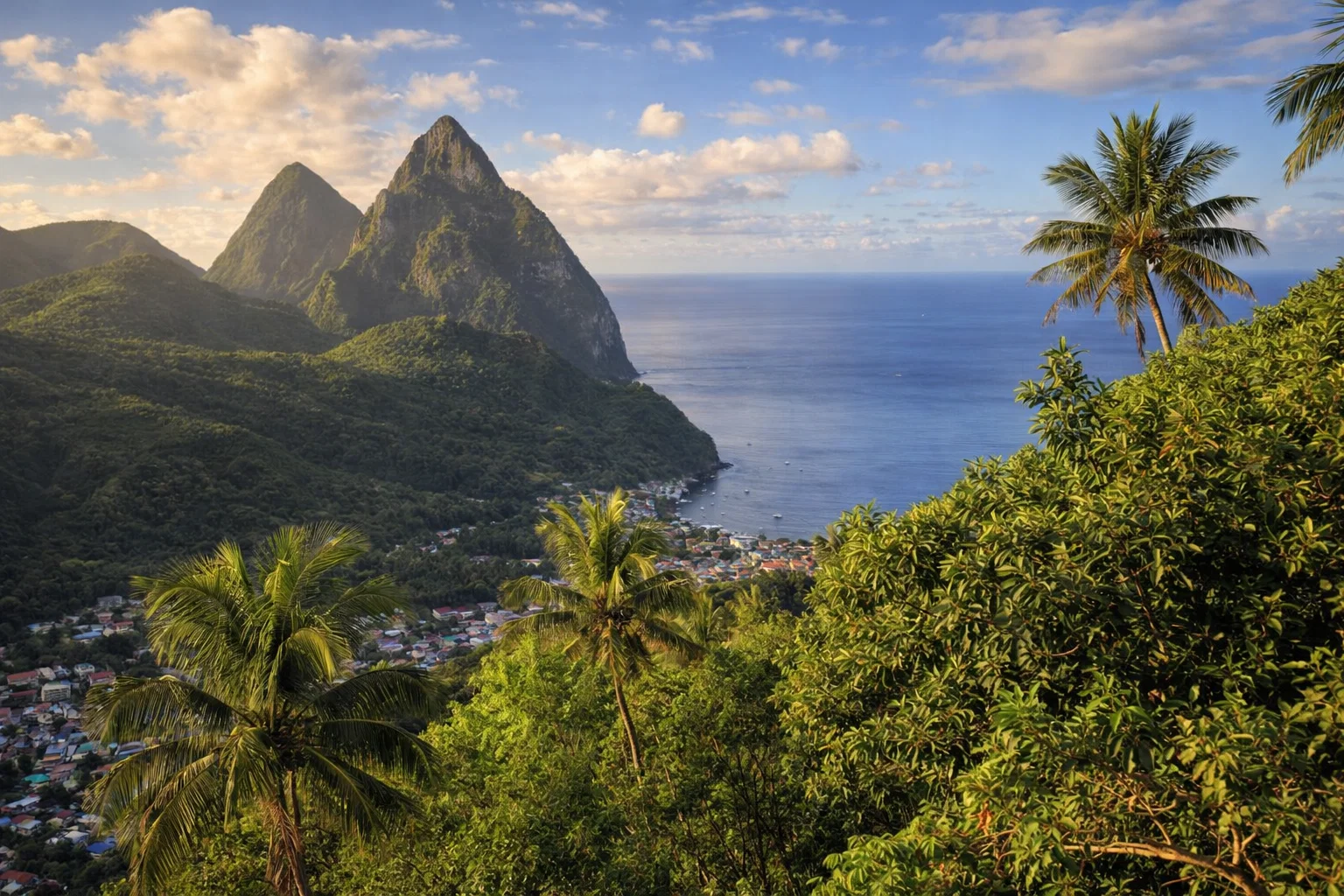
You may think you know St. Lucia, with its turquoise waters, golden beaches, and lush rainforests, but there’s so much more to this Caribbean paradise than meets the eye.
An island of enchanting contradictions, where the beauty of nature meets the richness of culture, and where the past intertwines effortlessly with the present.
Did you know it’s home to the world’s only drive-in volcano, or that it has produced two Nobel laureates?
There’s a wealth of fascinating facts waiting to be uncovered. So, are you ready to dive deeper into the hidden gems of St. Lucia?
The Twin Peaks of St. Lucia
You can’t miss the majestic Twin Peaks of St. Lucia, known as the Pitons, which dominate the island’s landscape with their towering heights and breathtaking beauty.
These iconic peaks, Gros and Petit Piton, are a proof of the island’s volcanic origin. This peak formation is unique, with their near-vertical slopes rising sharply from the sea, a sight that leaves visitors awestruck.
Adventure seekers will love the hiking trails on and around the Pitons. Ascend Gros Piton, the taller and more accessible of the two, for a challenge that rewards you with panoramic views of the Caribbean Sea and St. Lucia’s lush landscape.
Remember, it’s a strenuous climb, so prepare adequately. Petit Piton’s trail is less defined, making it a climb for experienced hikers only.
St. Lucia’s Unique National Symbol
While the Pitons may be St. Lucia’s most famous landmarks, it’s the island’s national symbol, the St. Lucia Parrot, that truly captures its unique character.
This lively bird, boasting vibrant hues of blue, green, and red, is a symbolic representation of the island’s rich biodiversity.
Yet, the St. Lucia Parrot isn’t just a pretty face. It’s a reflection of the nation’s commitment to conservation, mirrored in the ongoing parrot protection efforts.
Once nearly extinct, the parrot’s population is rebounding thanks to strict laws and dedicated conservation initiatives.
As you explore St. Lucia, remember that this colorful parrot is more than a national symbol, it’s a triumphant emblem of the island’s enduring love for its natural heritage.
The Island’s Vibrant Cultural Mix
Immersed in a rich tapestry of cultural influences, St. Lucia’s vibrant mix of African, French, and British heritage is palpable in every corner of the island.
The island’s African heritage manifests prominently in its music, dance, and cuisine. You’ll find the rhythm of African drum beats pulsating in the local music, while traditional dance moves tell tales of the island’s rich past.
The Creole influence, a blend of African and French cultures, is evident in their language, Patois, and their culinary delights. You’ll taste this fusion in St. Lucia’s national dish, ‘green fig and saltfish’.
This cultural blend doesn’t just add flavor to the island, but also contributes to a unique identity that distinctly sets St. Lucia apart from its Caribbean neighbors.
Pigeon Island’s Historical Significance
Steeped in historical significance, Pigeon Island, a mere speck on the map, reveals a profound story of St. Lucia’s past that’s as fascinating as it’s enlightening.
Once a hideout for pirates, you can almost hear the echoes of swashbuckling exploits, providing a vivid glimpse into the island’s pirate history.
In the 18th century, it played a pivotal role in naval battles between the French and British. In fact, Admiral Rodney, a British naval officer, fortified the island, using it as a base to monitor French ships.
Walking the island’s trails, you’ll encounter remnants of military forts, adding a tangible layer to your understanding of St. Lucia’s complex past.
St. Lucia’s Volcanic Origins
Diving into St. Lucia’s geological roots, you’ll discover that the island’s picturesque landscapes are the result of its volcanic origins, shaping not only its topography but also its rich biodiversity.
This volcanic formation has sculpted a terrain of sharp mountain peaks, lush valleys, and dramatic coastlines.
As you traverse the island, you can’t miss the iconic twin peaks, the Pitons, remnants of lava domes from ancient eruptions. You’ll find the world’s only drive-in volcano, Sulphur Springs, where the earth’s crust reveals bubbling mud pools and steamy vents, a reflection of St. Lucia’s fiery birth.
Its lava landscapes have given way to fertile soils, nurturing diverse flora and fauna. Truly, St. Lucia’s volcanic roots have crafted an island of fascinating sights and diverse ecosystems.
The Unusual Cuisine of St. Lucia
Venture into the world of St. Lucia’s unusual cuisine, and you’ll discover a gastronomic paradise defined by a fusion of flavors, reflecting the island’s rich cultural history and abundant natural resources.
The Green Fig Cuisine is a must-try. It’s a unique blend of green bananas and saltfish, a confirmation of the island’s agricultural strength and fishing tradition. You’ll find it offers a delightful contrast of textures and tastes, with its soft bananas and salty fish.
Then there’s the intriguing Banana Ketchup Origins, a sweet and tangy condiment that’s a staple in every St. Lucian home.
Made from ripe bananas, spices, and vinegar, it’s a perfect example of the island’s creative use of its plentiful banana crop.
The Famous St. Lucian Nobel Laureates
Just as you’d savor the unique flavors of St. Lucia, you’ll equally admire the intellectual feast served by the island’s two Nobel laureates.
The Laureate Achievements of Sir Arthur Lewis and Derek Walcott have brought global recognition, enhancing the Nobel Impact on this Caribbean gem.
Lewis, an economist, won the Nobel Prize for Economics in 1979. His groundbreaking work in economic development, particularly in developing countries, is still referenced today.
Walcott, a poet and playwright, scooped the Nobel Prize in Literature in 1992. His portrayals of Caribbean life and culture are both captivating and thought-provoking.
In St. Lucia, they’re not just celebrated as national heroes, but as global influencers. These laureates have shown that St. Lucia isn’t just about beautiful beaches, it’s also a cradle of intellectual brilliance.
St. Lucia’s Uncommon Drive-in Volcano
Beyond the island’s intellectual prowess, St. Lucia offers an unusual geological marvel: a drive-in volcano, one of the only of its kind in the world. This unique feature is a must-see for your volcano exploration.
It’s not every day you can drive up to the edge of a volcano, gaze into its bubbling interior, and live to tell the tale. This volcano, known as Sulphur Springs, is indeed a rare spectacle.
The volcano is dormant, but you’ll still see a show with steam and bubbling mud pools resulting from the heat below the earth’s crust. Don’t miss the chance to dip into the therapeutic sulphuric pools, renowned for their healing properties.
It’s a one-of-a-kind adventure that’ll take your St. Lucia experience from memorable to unforgettable.
The Island’s French and British Influence
Immersing yourself in St. Lucia’s culture, you’ll quickly notice the strong French and British influences that shape the island’s unique identity.
From the Creole language, a delightful mix of French and African dialects, to the French architecture that dots the landscape, the island’s history is palpable.
St. Lucia’s Creole, also known as ‘Patois’, is widely spoken, adding an exotic rhythm to the local chatter. As you stroll through the streets, you’ll marvel at the French-inspired architectural gems, reminiscent of a more classical era.
The British influence isn’t forgotten either, with English being the official language and the island’s driving on the left-hand side.
This rich blend of cultures makes St. Lucia a fascinating, multi-faceted destination. It’s a cultural tapestry woven from centuries of history.
St. Lucia’s Rare Species and Biodiversity
Diving into St. Lucia’s natural world, you’ll discover a wealth of biodiversity, boasting unique species that can’t be found anywhere else on the planet.
From the St. Lucia whiptail lizard to the St. Lucia parrot, the island is a hub of Endemic Wildlife Conservation. You’ll be mesmerized by the vibrant colors and distinctive patterns of these creatures, a reflection of St. Lucia’s rich biological diversity.
But it’s not just about the fauna, as the island’s flora is equally enchanting. With Exotic Flora Exploration, you’ll encounter a multitude of rare, stunning plant species.
From towering rainforest trees to delicate orchids, St. Lucia’s flora will leave you in awe of its beauty and variety. It’s a biodiversity hotspot that’s sure to captivate any nature enthusiast.
Bottom Lines
So, there you have it! St. Lucia’s not just about mesmerizing scenery and luxury resorts. It’s a land with a vibrant cultural mix, unique symbols, and historical significance.
It’s home to Nobel laureates, rare species, and even a drive-in volcano. Its French and British influences are unmistakable.
St. Lucia is truly a treasure trove of wonders that’s waiting for you to explore.
So why wait? Start planning your adventure to this enchanting island today!